
A Tiny Koala Joey Brings Big Conservation News
A baby koala hidden in its mother’s pouch has become a quiet little symbol of hope.
6 min readApr 25, 2026
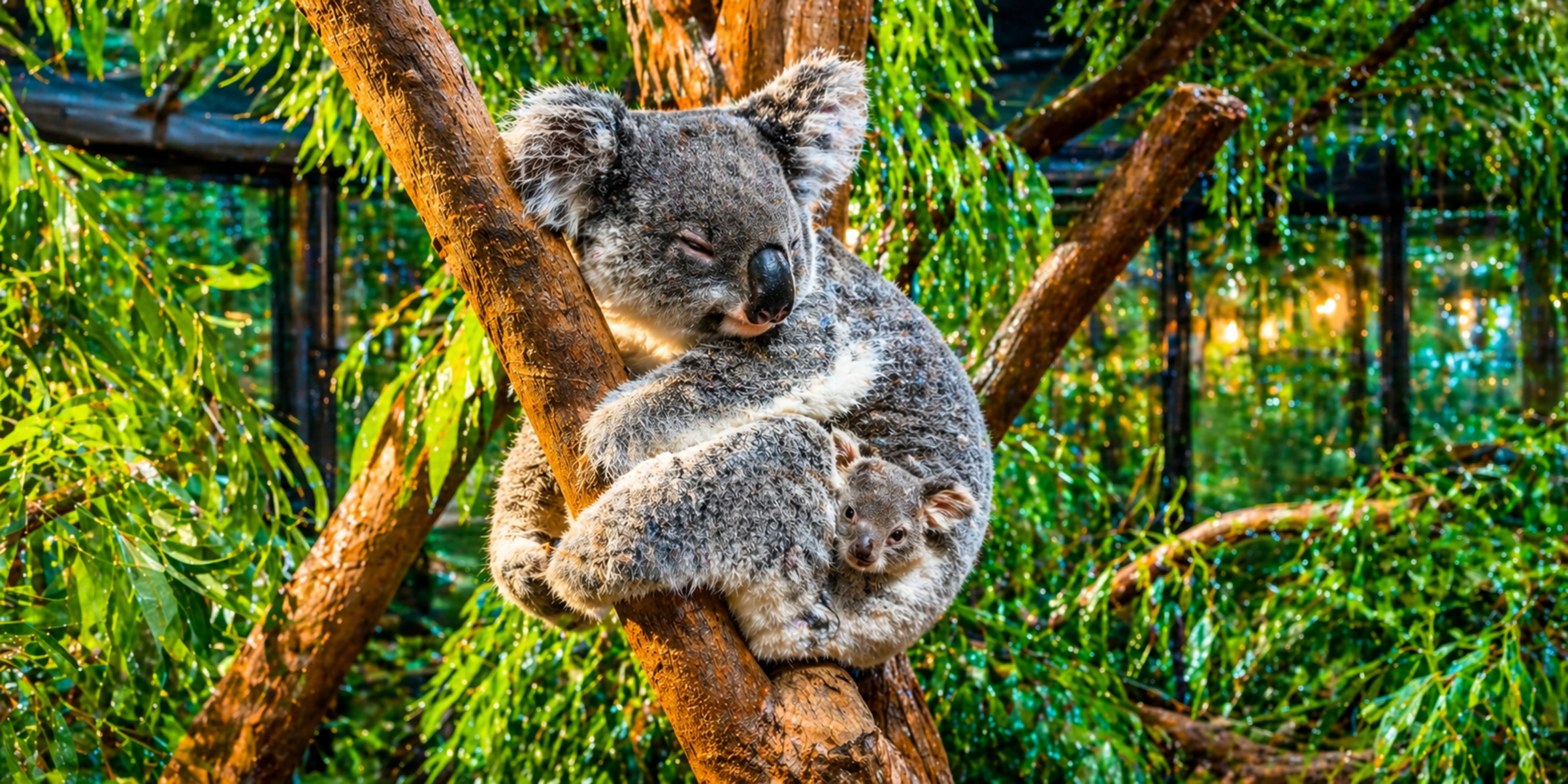
The small birth with a big meaning
There are some animal stories that do not need fireworks to matter. A baby koala, still tucked safely inside its mother’s pouch, is one of them. At the Palm Beach Zoo & Conservation Society in West Palm Beach, Florida, the zoo is celebrating its first koala birth, alongside the opening of a newly renovated koala habitat. The joey was born to Ellin and Sydney last fall and has only recently started to become visible to zoo staff. That is the gentle part of the story. The bigger part is what this birth represents. Koalas are not just cute animals people stop to admire. They are a species under real pressure, and every carefully managed birth in a conservation setting carries more weight than most visitors realise.
The joey still hidden away
Koalas do things in their own slow, secretive way. The joey is still spending most of its time in Ellin’s pouch, which is exactly where it should be at this stage. Zoo staff are watching Ellin closely, keeping an eye on her weight and giving her extra food while she cares for the baby. It is simple, steady work, but it matters. A healthy mother gives the joey the best chance to grow stronger before the public gets a proper look. For visitors, the excitement is in knowing there is a new life tucked away. For the zoo team, the real work is patience, observation, and making sure mother and baby are left to do what nature designed them to do.
Why this matters beyond the zoo
The problem is that koalas have become a symbol of what happens when habitat, climate, disease, and human pressure all meet at once. In Australia, koala populations in Queensland, New South Wales, and the ACT were officially listed as endangered under national environmental law in 2022. That listing was not made for decoration. It reflected serious concern about the future of those populations. Habitat loss remains one of the biggest threats, along with disease, bushfire, climate pressure, and fragmentation of the places koalas need to survive. So when a zoo celebrates a successful joey, it is not just a cute headline. It is part of a much larger conservation picture.
The new outback habitat
The renovated koala habitat is designed to give the animals more space, more greenery, and more chances to behave naturally. The upgraded area includes new perching for exercise, solar tubes to bring in more natural light, and access between a climate-controlled indoor exhibit and an expanded outdoor area. That matters because koalas are climbers. They need places to move, rest, and feel secure. A better habitat is not just about making things look nicer for visitors. It is about giving animals choices. When animals can move between spaces and use their environment more naturally, welfare improves. This is where a modern zoo starts to look less like a display and more like a managed conservation environment.
The conservation role of zoos
What this really means is that zoos are no longer only places where people go to look at animals. The better ones now carry a deeper responsibility. They help manage breeding programs, educate the public, support research, and keep attention on species that might otherwise fade from the public mind. In this case, koalas in the United States are on loan from the Australian federal government to support conservation practices. That detail matters. These animals are not simply there as attractions. They are part of a managed conservation relationship, and the goal is to help maintain knowledge, care standards, and genetic diversity across populations held in human care.
The genetic diversity question
Genetic diversity may sound like a dry science term, but it is one of the quiet foundations of survival. A population with stronger genetic diversity has a better chance of coping with disease, changing conditions, and future breeding challenges. A population with poor diversity becomes more fragile. That is why the successful birth of a joey matters to the zoo team. It is not just about adding one more koala to the habitat. It is about contributing to the long-term management of the population in the United States. A single joey will not save a species, but in conservation, progress often comes one careful step at a time.
The animal people come to love
Koalas have a rare place in the public imagination. They are calm, sleepy-looking, tree-loving animals that seem almost too gentle for the modern world. That is part of why people connect with them so quickly. But that softness can also hide the seriousness of their situation. A visitor may see a koala resting in a tree and think everything is fine. The truth is more complicated. In the wild, koalas depend heavily on eucalypt forests. When those forests are cleared, broken up, burned, or pushed into smaller fragments, koalas lose food, shelter, safety, and breeding space. The animal that looks peaceful in a zoo habitat is tied to a much harder story outside the fence.
Why habitat design matters
This is where habitat design becomes more than decoration. A good habitat lets an animal move, climb, rest, hide, explore, and cooperate with keepers without unnecessary stress. The Palm Beach Zoo says the new habitat supports voluntary, cooperative care between zoologists and koalas. That is an important idea. Cooperative care means animals are trained and managed in ways that reduce force and stress. Instead of making every health check a struggle, keepers can work with animals more calmly. For a species like the koala, where health monitoring matters, that kind of design can make daily care easier and safer.
The public connection
The public side of this story matters too. People protect what they understand, and they usually understand animals best when they can see them up close. A joey in a pouch gives people a reason to care. A renovated habitat gives educators a chance to explain why koalas need proper environments, both in zoos and in the wild. A family visiting the zoo may arrive for a cute animal moment and leave knowing more about endangered species, habitat loss, and conservation. That kind of shift may seem small, but conservation has always depended on attention. Without public attention, funding dries up. Without funding, programs struggle. Without programs, endangered species lose another layer of support.
The australian link
For Australians, koalas are more than a wildlife poster. They are part of the national story, even for people who rarely see them in the wild. That is why it can feel strange to read about a Florida zoo celebrating a koala birth. But it also shows how far the conservation network now stretches. Australian wildlife is not only Australia’s concern. When a species becomes globally recognised, it also becomes globally supported. The real home of the koala will always be Australian bushland, but managed populations overseas can help with education, research, and conservation awareness. The key is remembering that the zoo story should point people back to the wild story, not replace it.
The harder truth behind the cute headline
The problem is that cute animal stories can sometimes make conservation feel easier than it is. A baby koala is wonderful news, but the threats facing koalas remain serious. Habitat loss is still the big one. Disease is still a problem. Climate stress and bushfire risk still shape the future. In some regions, roads, dogs, land clearing, and fragmented bushland all add pressure. The joey in Florida is a hopeful moment, but hope has to be tied to action. Otherwise, it becomes just another nice photo in the news cycle. The real measure of success is whether stories like this help people understand the bigger conservation challenge.
What changes next
What changes next is public attention. The renovated habitat opens the door for more visitors to learn about koalas in a setting built around better welfare. The joey will grow, become more visible, and likely become a strong education moment for the zoo. Behind the scenes, staff will keep monitoring Ellin and the baby carefully. More broadly, stories like this help keep koalas in the conservation conversation. That matters because endangered species do not survive on sympathy alone. They need habitat protection, funding, science, good policy, and public pressure that does not disappear after the headline fades.
The bigger picture
A tiny koala joey in Florida is not the whole answer to koala conservation. But it is still a meaningful piece of the story. It shows that careful animal care, thoughtful habitat design, and managed conservation programs can produce real moments of progress. It also reminds people that endangered animals are not abstract problems. They are living creatures, with mothers, babies, food needs, shelter needs, and futures that depend on human choices. The joey may be small, hidden, and only just starting to peek out into the world, but the message is much bigger. Conservation works best when people pay attention before it is too late.