

Congress Is Moving to Kill a Popular Bitcoin Tax Trade While Handing a Smoother Tax Lane to Regulated Stablecoins
Congress is no longer just taxing crypto, it is starting to decide which kinds of crypto deserve to function like money and which should be treated like speculation.
11 min readMar 30, 2026
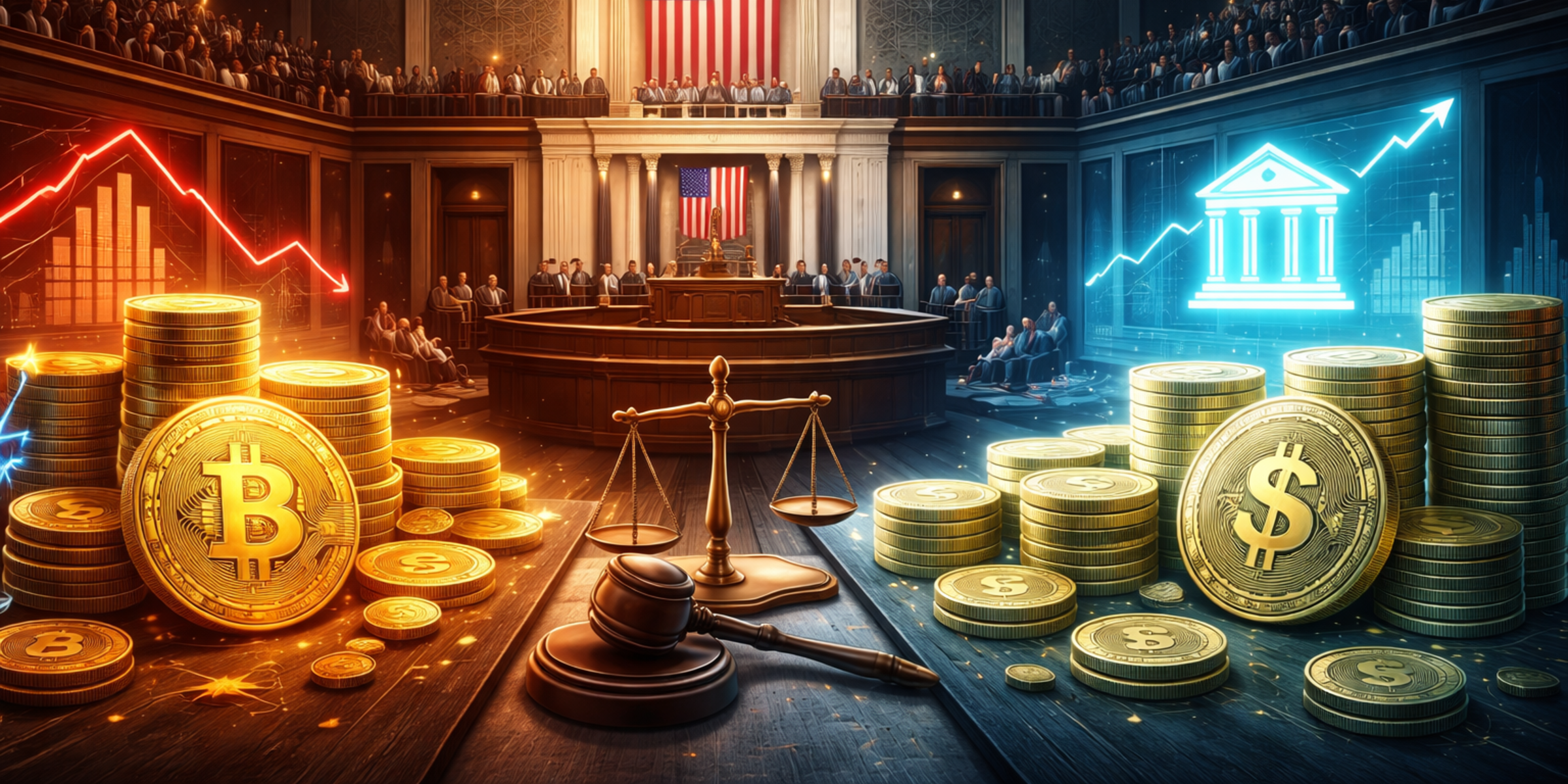
The headline sounds dramatic, but the underlying move is very real
The latest fight in Washington is not really about whether digital assets will be taxed. That part was settled long ago. The real question now is what kind of digital assets lawmakers want to encourage, what kind they want to discourage, and how far they are willing to reshape the rules to force that distinction into the tax code. The current discussion draft at the center of this story, the Digital Asset PARITY Act, does exactly that. It would extend wash sale rules to digital assets and related instruments, while creating a very narrow tax relief lane for certain regulated payment stablecoins. That combination matters because it does not just tidy up technical inconsistencies. It reveals what kind of crypto future parts of Congress increasingly want.
The first important fact is status. This is a bipartisan discussion draft, not a fully enacted law. It was unveiled by Representatives Steven Horsford and Max Miller in December 2025, and the text itself is labeled “[DISCUSSION DRAFT].” That means the provisions are serious enough to analyze, but not final, not passed, and not guaranteed to survive intact. Any blog that treats this as already settled law would be overstating the case. Still, discussion drafts matter because they show where lawmakers are trying to move the debate and what tradeoffs they are now willing to put on paper.
What Congress is actually trying to change
The most politically explosive piece is the proposed wash sale change. Right now, crypto traders have long benefited from a quirk in the tax code: the wash sale rule that applies to securities does not generally apply to Bitcoin and many other digital assets in the same way. In practical terms, that has allowed traders to sell a digital asset at a loss, realize the tax loss, then quickly buy back exposure without triggering the same restriction that stock investors face. The discussion draft would rewrite Section 1091 so that wash sale treatment applies to “specified assets,” including actively traded digital assets and related derivatives. That is the part many people casually call the “Bitcoin tax loophole.”
At the same time, the very first section of the draft creates something that looks almost like the opposite treatment for a narrow class of stablecoins. It says gross income shall not include gain, and loss shall not be recognized, from the sale or exchange of a “Regulated Payment Stablecoin,” subject to detailed conditions. To qualify, the token must be a U.S. dollar pegged payment stablecoin issued by a permitted issuer and must have maintained a price within 1 percent of one dollar for at least 95 percent of trading days in the prior twelve months, while also having been acquired by the taxpayer within 1 percent of one dollar. That is not broad crypto relief. It is very targeted relief for a regulated, dollar linked category of digital asset.
The draft goes even further in narrowing the exception. The stablecoin safe harbor does not apply if the sale or exchange occurs outside a 99 cent to $1.01 per unit band. If that exception is triggered, the bill says the taxpayer’s basis would be deemed to be $1.00 per unit for purposes of calculating gain or loss. The effective date in the draft says the stablecoin provision would apply to taxable years beginning after December 31, 2025, while the wash sale rule would apply to sales, dispositions, and terminations in taxable years beginning after the date of enactment. That timing distinction also matters because it shows lawmakers are treating the stablecoin rule as a structured administrative simplification while treating the wash sale extension more like a straightforward anti abuse move.
This is not just about taxes, it is about what Washington wants crypto to become
The easiest way to misunderstand this story is to treat it as dry tax housekeeping. It is not. It is a policy signal. Congress is effectively saying one kind of digital asset behavior should be pulled closer to the tax treatment of stocks and derivatives, while another kind of digital asset, the tightly regulated dollar pegged payment token, should get treatment closer to how money substitutes are handled in everyday use. That is a much bigger statement than it first appears. It says lawmakers increasingly want to sort the digital asset universe into buckets with very different social and economic meanings.
That broader direction has been visible for a while. The bipartisan discussion draft released in December was presented as an effort to bring “clarity, consistency, and common sense guardrails” to digital asset taxation. Tax analysis published since then notes that the proposal does not just address wash sales and stablecoins. It also reaches digital asset lending, charitable contribution appraisals, sourcing rules, and other parts of the code where digital assets have been treated inconsistently or awkwardly. This is the sort of bill that tries to force digital assets into a more mature tax architecture, but not on one set of terms for everyone.
My opinion is that this is where the story gets much more interesting. The bill is not neutral in its practical philosophy. It is not simply saying “crypto deserves tax clarity.” It is saying different classes of crypto deserve different tax identities. Bitcoin and other actively traded digital assets are being moved toward tighter anti abuse rules, closer to the logic already used in securities markets. Regulated payment stablecoins, by contrast, are being moved toward a friction reducing framework designed to make everyday use less tax annoying. One side gets more scrutiny. The other gets more usability. That is not an accident.
Why the wash sale part matters so much for Bitcoin and active traders
For years, the wash sale gap has been one of the easiest legal tax strategies in crypto. If a trader was sitting on a loss in Bitcoin or another actively traded token, they could sell before year end, capture the capital loss, and re enter the position quickly. In the stock market, that kind of move is constrained because buying back substantially identical securities within the disallowed window can kill the deduction. In crypto, that asymmetry helped create an unusually permissive environment for tax loss harvesting. Once that gap closes, active crypto trading becomes more aligned with the rules traditional investors already face.
This matters not just for whales or hedge funds, but for a very broad layer of crypto investors who became used to more favorable tax timing than stock investors get. It also matters symbolically. Bitcoiners often like to argue that Bitcoin is distinct from traditional finance and should not be boxed into securities market assumptions. But tax law does not care much about ideological self description when lawmakers believe there is an anti abuse gap. If the discussion draft’s wash sale language eventually passes in roughly current form, Bitcoin may still be culturally distinct, but one of its handiest tax differences would shrink significantly.
My view is that this is one of those changes many retail holders will ignore until they suddenly feel it. Crypto users often focus on price, ETFs, or custody policy, but tax treatment quietly shapes behavior just as much. A wash sale change would not make Bitcoin less attractive to long term believers. But it would make it more annoying for active traders and anyone used to opportunistic tax loss harvesting. That may not sound dramatic, yet over time it changes incentives and could reduce one of the quiet advantages crypto had over equities in taxable accounts.
Why lawmakers are giving stablecoins the smoother treatment
The stablecoin provision is where the politics becomes very revealing. Under the discussion draft, a narrow category of regulated payment stablecoins would largely avoid routine gain or loss recognition when sold or exchanged, so long as the stablecoin stayed tightly around the one dollar peg and the taxpayer acquired and sold within that narrow economic range. This is basically Congress saying that if a digital dollar instrument is sufficiently regulated, sufficiently stable, and sufficiently money like, the code should stop treating tiny fluctuations like taxable noise. That is a major philosophical shift, even if it is narrowly framed.
The draft itself explicitly says this limited relief reflects the lawmakers’ judgment that tax legislation should follow existing statute, “e.g., GENIUS,” rather than imply that all digital assets deserve similar treatment. That language is critical. It shows the relief is being tied to the broader regulated stablecoin framework already emerging in Washington. This is not a gift to the whole crypto market. It is a reward for the subset of digital assets that lawmakers think can be domesticated into a compliant, dollar centric payment system.
That policy choice lines up with broader U.S. stablecoin regulation. The GENIUS Act, enacted last year, created the federal framework for permitted payment stablecoin issuers, and regulators are already writing implementation rules around capital, AML, supervision, and public reporting. So when the discussion draft offers a de minimis style tax simplification to qualifying stablecoins, it is building on a political consensus that these tokens are no longer being treated merely as speculative crypto instruments. They are increasingly being treated as a regulated financial utility.
My opinion is that this is the real headline, more than the wash sale crackdown. Congress is beginning to split digital assets into favored and disfavored categories based on function. If your token looks like a regulated digital dollar, lawmakers want to make it easier to use. If your asset looks like an actively traded speculative instrument, lawmakers want fewer special tax gaps. That is a huge statement about the future shape of U.S. crypto policy. The state is not saying no to digital assets. It is saying yes to the parts that fit a regulated dollar and payment architecture, and no to some of the quirks that helped the more speculative side of crypto feel unusually permissive.
The bill is broader than these two talking points
Another important fact is that the discussion draft does more than wash sales and stablecoins. It addresses sourcing rules for trading in digital assets, tax treatment of digital asset lending arrangements, mark to market elections for dealers and traders, appraisal rules for charitable contributions of highly liquid digital assets, and other areas where current law is awkward or silent. Tax specialists have noted that the draft is trying to create parity by importing into digital assets a mix of securities, commodities, and cash equivalent concepts depending on the use case.
That matters because it shows the stablecoin versus Bitcoin framing, while catchy, is only part of the story. The larger project is tax normalization. Congress is working from the assumption that digital assets are now permanent enough, large enough, and economically significant enough that the tax code can no longer afford to keep them in a partially improvised status. The bill is trying to close gaps, reduce noise, and stop treating digital assets as though they are too new or too weird to fit inside a more systematized framework.
Still, the choices about which parts of the market get relief and which parts get tighter anti abuse rules are not random. That is why I think the stablecoin section has wider symbolic power than its narrow text might suggest. It tells us what Congress increasingly thinks should act like money in the digital asset world. Not Bitcoin. Not a broad class of tokens. Not the whole crypto market. Regulated payment stablecoins tied tightly to the U.S. dollar.
This could reshape how crypto users think about utility versus speculation
One of the odd things about crypto over the last few years is that the market has often talked as if all digital assets were marching toward the same destination. In reality, policy is pushing them into different futures. Bitcoin may continue to dominate as a store of value narrative asset. Stablecoins may continue to rise as digital transaction rails. Other tokens may live somewhere between securities, commodities, and software access rights. The tax code is increasingly catching up to that fragmentation.
If this framework eventually passes in anything close to its current form, it would reinforce a sharper divide between using stablecoins as a medium of exchange and using Bitcoin or other digital assets as tradeable capital assets. Stablecoin users in qualifying cases would face less tax friction around routine movement close to par. Bitcoin users would lose one of their more useful tax harvesting advantages. That combination nudges behavior. It quietly says, if you want friction reduced, act like money. If you act like an investment, expect investor style restrictions.
My opinion is that this is exactly where Washington wants to go. Lawmakers are not trying to destroy crypto. They are trying to civilize it into categories that make sense to regulators, tax administrators, and payment system planners. The crypto industry may still talk about innovation, decentralization, and open systems. But the tax code is increasingly talking about something else: permitted issuers, dollar pegs, specified assets, and anti abuse consistency. That is a much more state legible future than the one crypto originally imagined.
The politics behind this are bigger than taxes
This is also part of a larger political realignment in Washington’s treatment of digital assets. Over the last year, stablecoins have become one of the easiest parts of crypto for lawmakers to support because they can be reframed as dollar infrastructure, payments modernization, and regulated financial technology. Bitcoin and other actively traded tokens are harder to fit into that narrative, especially when tax loopholes or anti abuse gaps are involved. So when Congress reaches for a rule that helps regulated stablecoins while restricting a popular Bitcoin trader strategy, it is not acting inconsistently. It is acting in line with a growing distinction between “useful” digital assets and “speculative” ones.
That does not mean Bitcoin is doomed politically. It still has strong constituency support, and the draft itself is bipartisan rather than anti crypto. But it does mean Bitcoin should not assume that political friendliness to digital assets automatically means preserving every favorable quirk that developed while the tax code lagged behind the market. Sometimes “maturity” in policy means losing your weird advantages. That may be exactly what happens here.
The bigger point
The factual takeaway is clear. Congress is considering a bipartisan discussion draft that would extend wash sale rules to actively traded digital assets and related derivatives while creating a narrow de minimis style gain and loss exclusion for certain regulated dollar pegged stablecoins. The text is real, the distinction is explicit, and the draft sits inside a broader effort to normalize digital asset taxation.
My judgment is that the deeper story is even more important than the tax mechanics. Washington is beginning to write into law a hierarchy within crypto. Highly regulated dollar stablecoins are being positioned closer to money. Bitcoin and similar assets are being positioned closer to taxable investment property subject to familiar anti abuse rules. That is not a technical footnote. It is one of the clearest policy signals yet about where U.S. crypto regulation wants the market to go. The future being favored here is not a single united crypto economy. It is a split one, where regulated stablecoins get smoother everyday treatment and speculative digital assets get fewer special breaks.
If that is the direction Congress keeps following, then the real message is simple. The tax code is no longer just catching up to crypto. It is starting to tell crypto what role each part of it is allowed to play.