
The Eternal Alliance: Fungi Before Life, Feeding Humanity, Healing Us, and Forging Our Future — 500 Million Years of Symbiosis
From primordial Earth to the mycobiome inside us and the mycelial technologies of tomorrow — how fungi enabled life, shaped every human civilization, and will save our planet. A passionate MycelNet deep dive.
5 min readMar 29, 2026
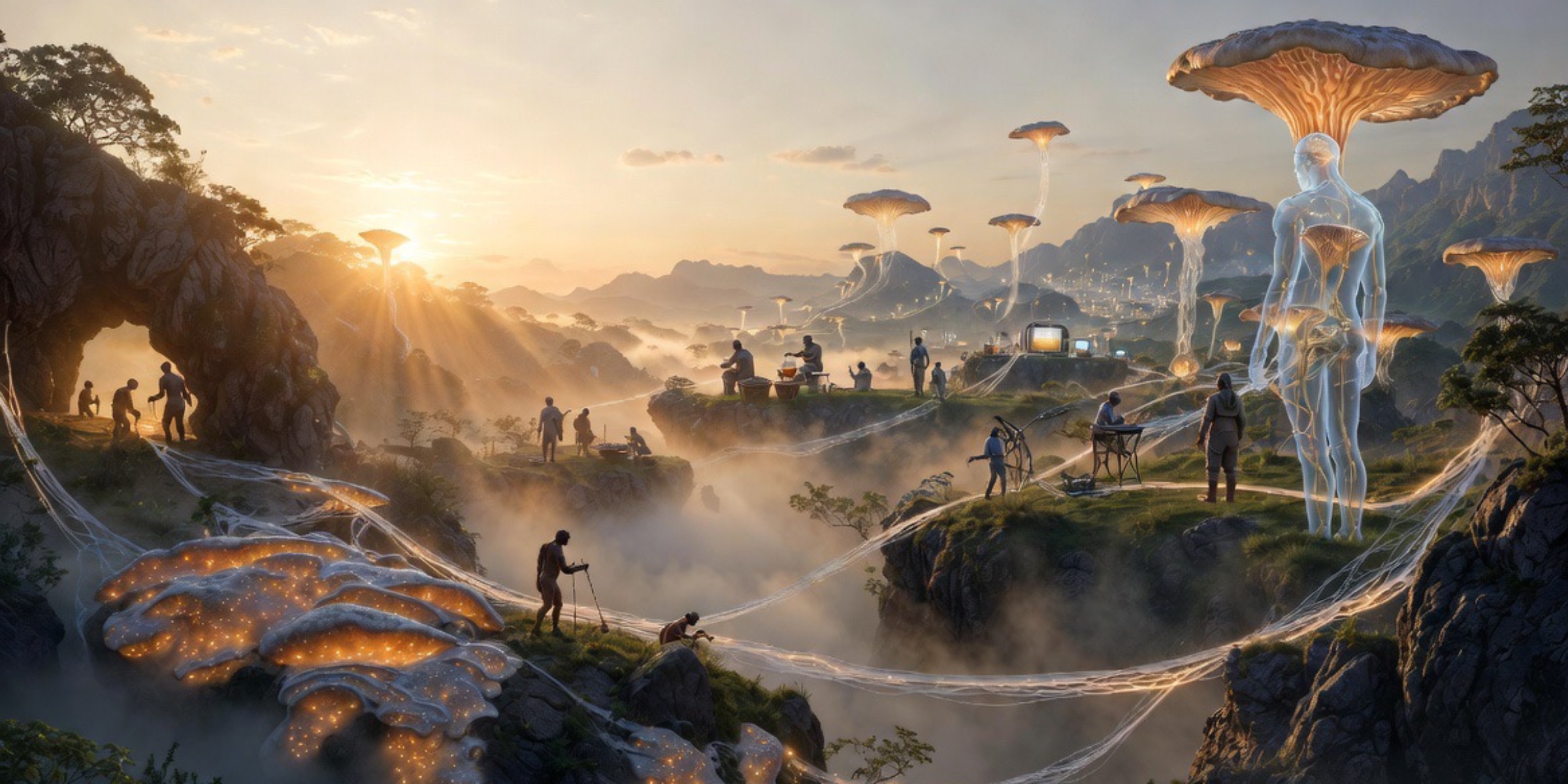
As a lifelong mycophile who has spent years chasing fungal stories across continents, I am constantly awed by one undeniable truth: mushrooms and their hidden mycelial networks didn’t just appear alongside humanity — they made humanity possible. For over 500 million years, fungi have been the quiet architects of life on Earth, forging alliances that allowed plants to conquer land, forests to breathe oxygen into our atmosphere, and humans to survive, evolve, and thrive. This is not ancient history alone; it is a living symbiosis that continues inside every one of us right now, and it stretches far into our future. Welcome to the deepest dive yet from MycelNet.
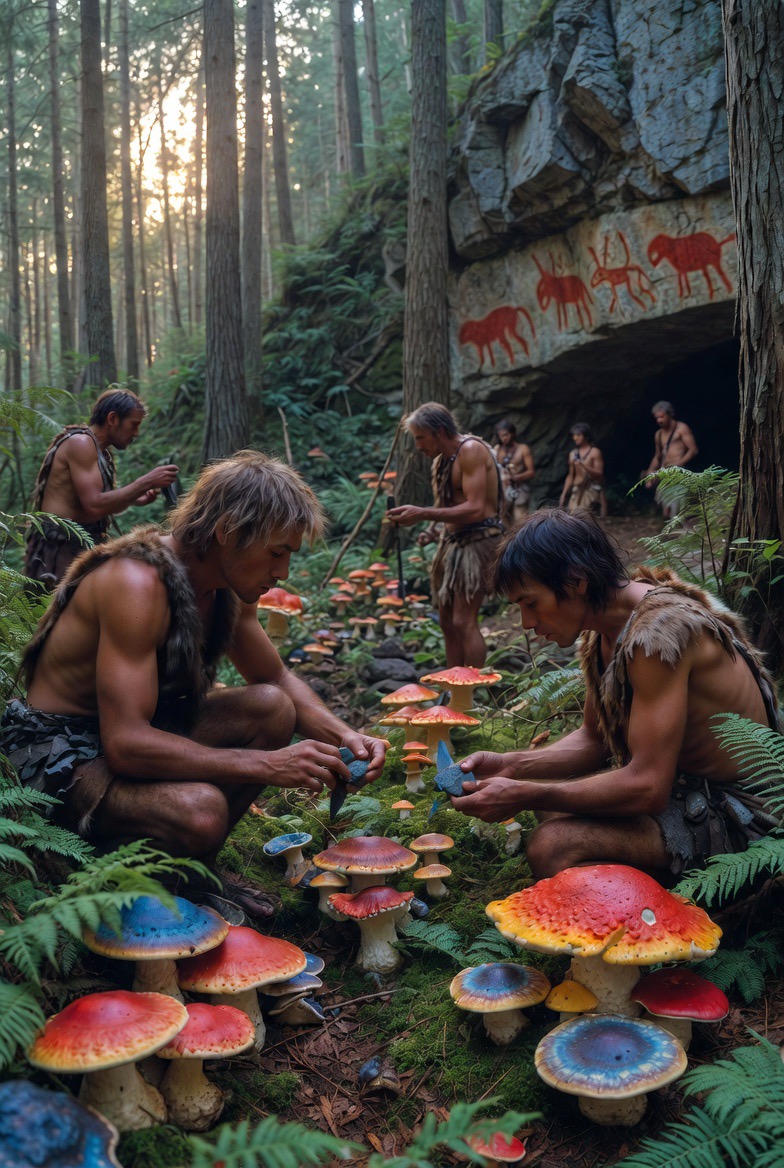
Our alliance began long before recorded time — fungi as the original teachers and survival partners.
But the story of fungi begins long before any human, animal, or even plant ever existed. Around 1–1.5 billion years ago, fungi emerged as some of the earliest complex eukaryotic life forms on Earth. They were the planet’s first great decomposers — breaking down rocks, releasing minerals, and slowly creating the very soil that would one day support all terrestrial life. Without these primordial fungal networks, the world would have remained barren rock. They prepared the stage for everything that followed.
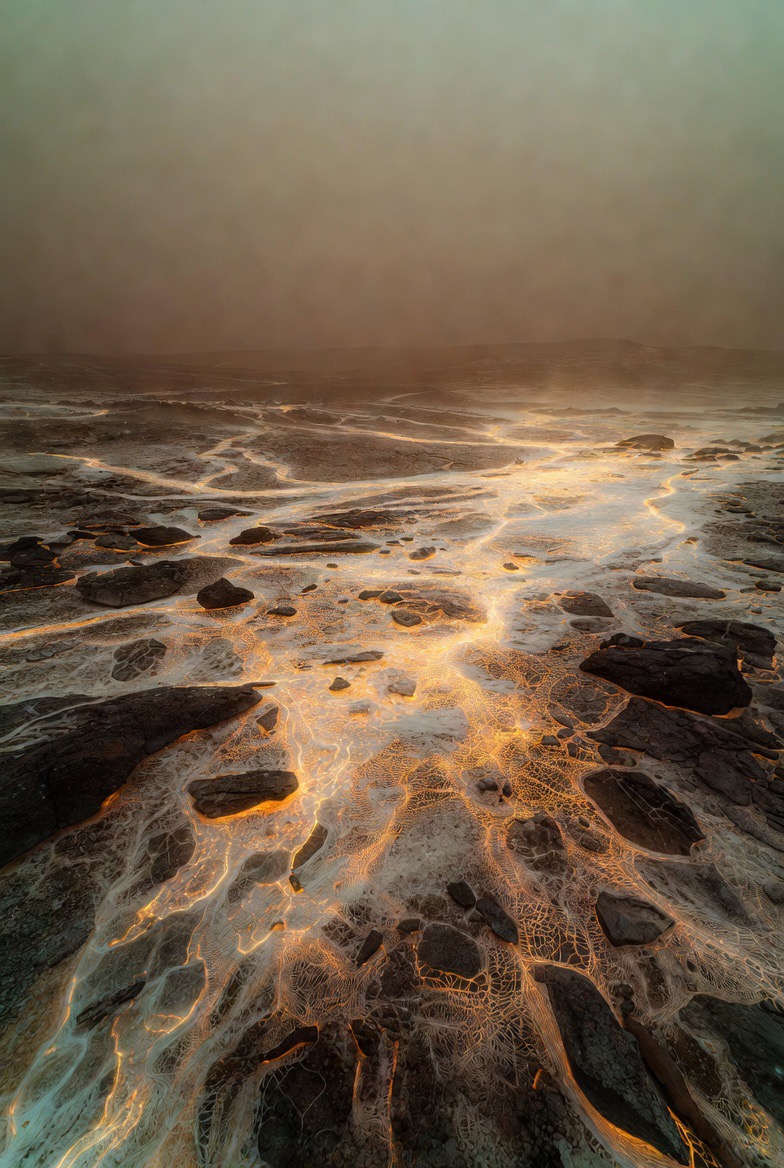
Fungi — the first complex life that turned rock into soil and made Earth livable.
Around 450–500 million years ago, primitive plants ventured onto dry land with virtually no roots. It was arbuscular mycorrhizal fungi that struck the first bargain: they wove their hyphae into the plants’ tissues, unlocking nutrients and water from barren soil in exchange for sugars. Without this symbiosis, land plants — and the entire terrestrial ecosystem that followed — might never have taken hold. Forests, oxygen, soil carbon, and eventually the food chains that fed our distant ancestors all trace back to this fungal handshake. Fungi quite literally helped Earth become habitable for us.
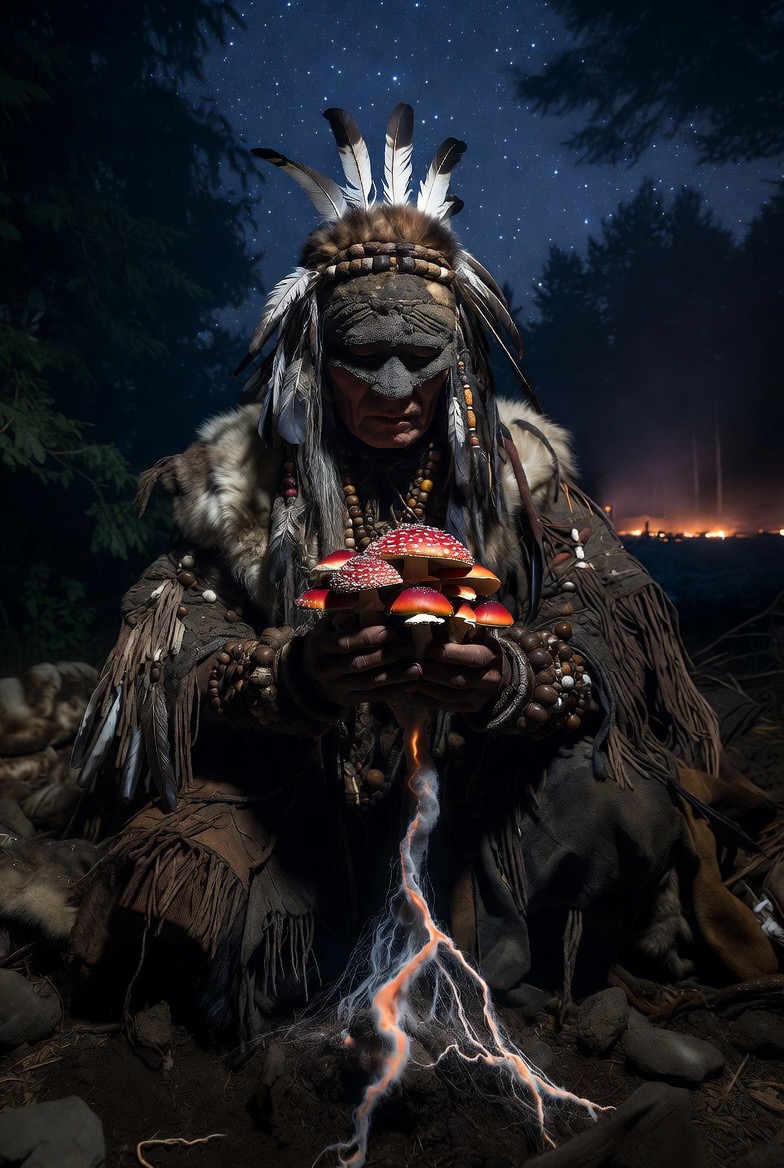
Amanita muscaria — sacred teacher and survival ally for indigenous cultures across millennia.
Fast-forward to our own species. The earliest archaeological whispers come from the Sahara’s Tassili n’Ajjer rock art (7000–9000 BCE), where humanoid figures sprout mushroom heads — unmistakable evidence that our ancestors incorporated psilocybin fungi into spiritual practice. In Siberia, reindeer-herding peoples used Amanita muscaria for shamanic journeys, healing, and endurance in extreme cold. When Ötzi the Iceman was discovered in the Alps in 1991, he carried carefully prepared birch polypore — a potent antibiotic and anti-inflammatory that helped him fight infection 5,300 years ago. Mushrooms were never mere food; they were medicine, ritual, and survival technology from the very dawn of humanity.
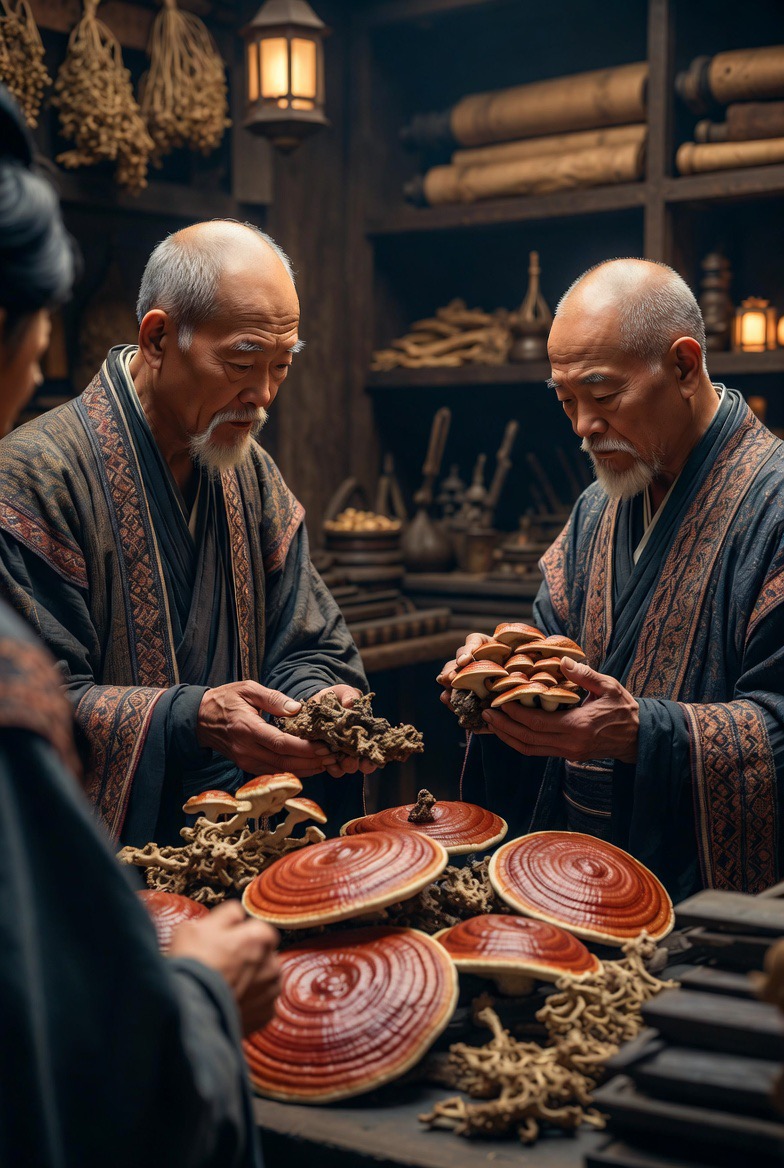
Reishi — the ‘mushroom of immortality’ that Chinese emperors and healers trusted for longevity and wisdom.
Ancient civilizations formalized this reverence. China’s Shen Nong Bencao Jing (~200 BCE) listed Reishi as a superior herb of immortality. Egyptian pharaohs reserved “plants of the gods” for royalty. Greek and Roman scholars classified species, feasted on prized boletes, yet also recorded deadly poisonings — a reminder of the power we were learning to wield.
But fungi have also been our everyday sustenance and the hidden force behind our greatest foods. For thousands of years we have harnessed them in fermentation: yeast (Saccharomyces cerevisiae) gave us bread, beer, and wine — staples that powered civilizations and celebrations alike. Ancient Egyptians baked leavened bread; Sumerians brewed beer; Asians perfected koji molds for miso, soy sauce, and sake. Even tempeh and certain cheeses owe their existence to beneficial fungi. Today, mycoprotein from Fusarium is grown into Quorn — a sustainable, low-impact protein feeding millions. Mushrooms themselves remain superfoods: Lion’s Mane, Shiitake, and Oyster varieties deliver protein, vitamins, and umami in every foraged or farmed bite.
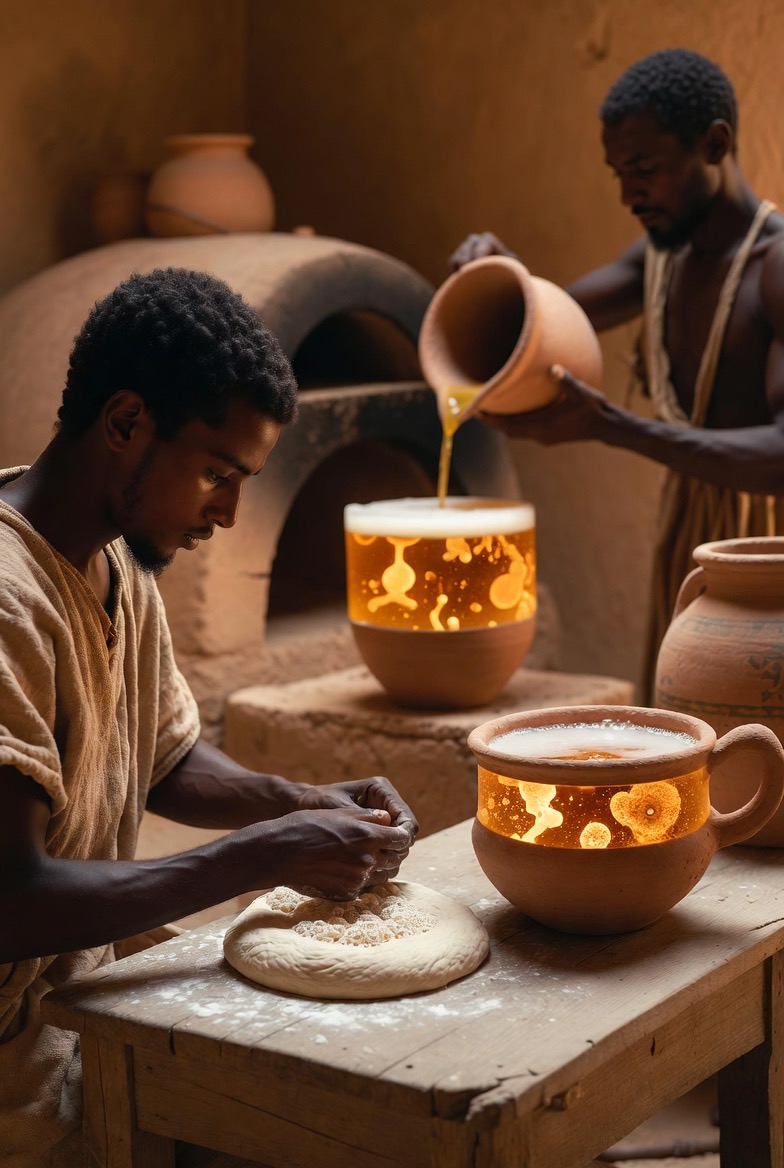
Yeast and molds — the invisible chefs that gave us bread, beer, wine, miso, and modern meat alternatives.
The Middle Ages cloaked fungi in fear — fairy rings, witch lore, devil’s work — yet village healers quietly continued using Chaga, Turkey Tail, and polypores for wounds and infections. Then came the scientific revolution: Elias Fries systematized mycology in the 1800s, and in 1928 Alexander Fleming’s accidental discovery of penicillin from Penicillium mold saved hundreds of millions of lives. Fungi literally rescued modern humanity from bacterial plagues.
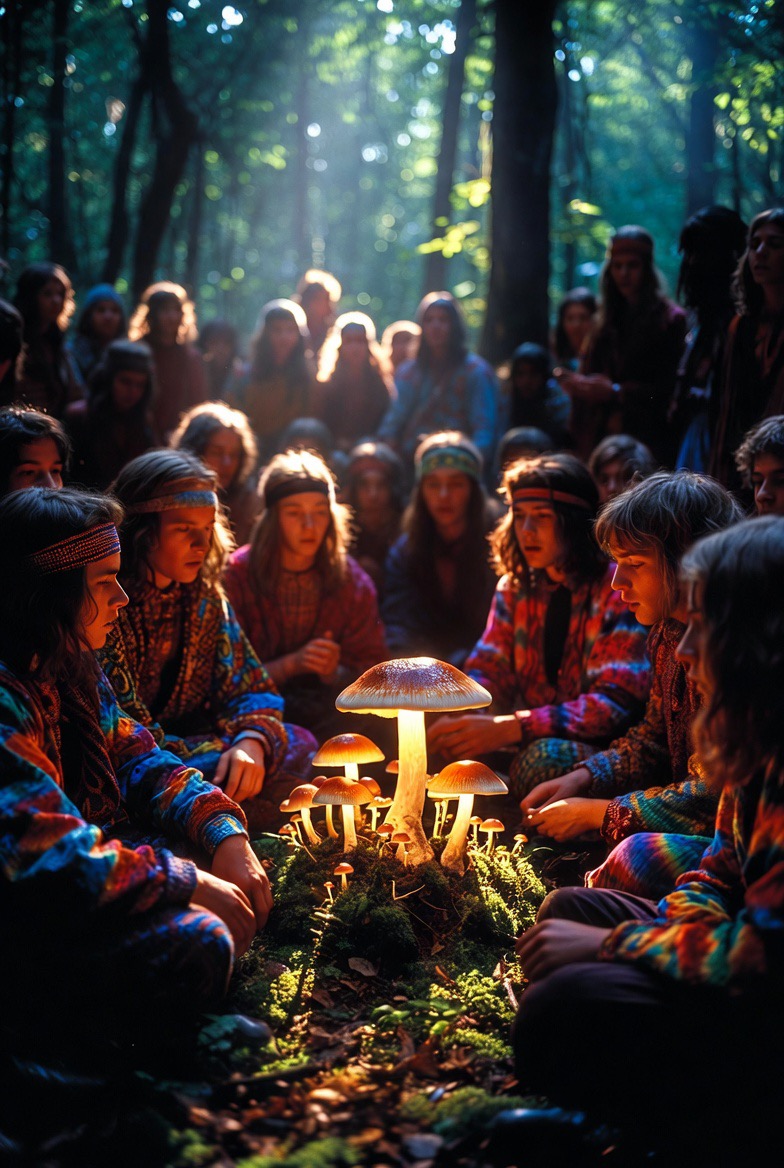
The psychedelic renaissance — fungi reopening doors of perception and healing.
In 1955, R. Gordon Wasson’s Life magazine article on Maria Sabina’s Mazatec velada ceremonies introduced psilocybin to the world. Albert Hofmann isolated the compound, Timothy Leary’s Harvard studies followed, and a generation discovered what indigenous cultures had always known: these fungi expand consciousness and heal trauma. After decades of prohibition, clinical trials today confirm extraordinary results for depression, PTSD, and addiction.
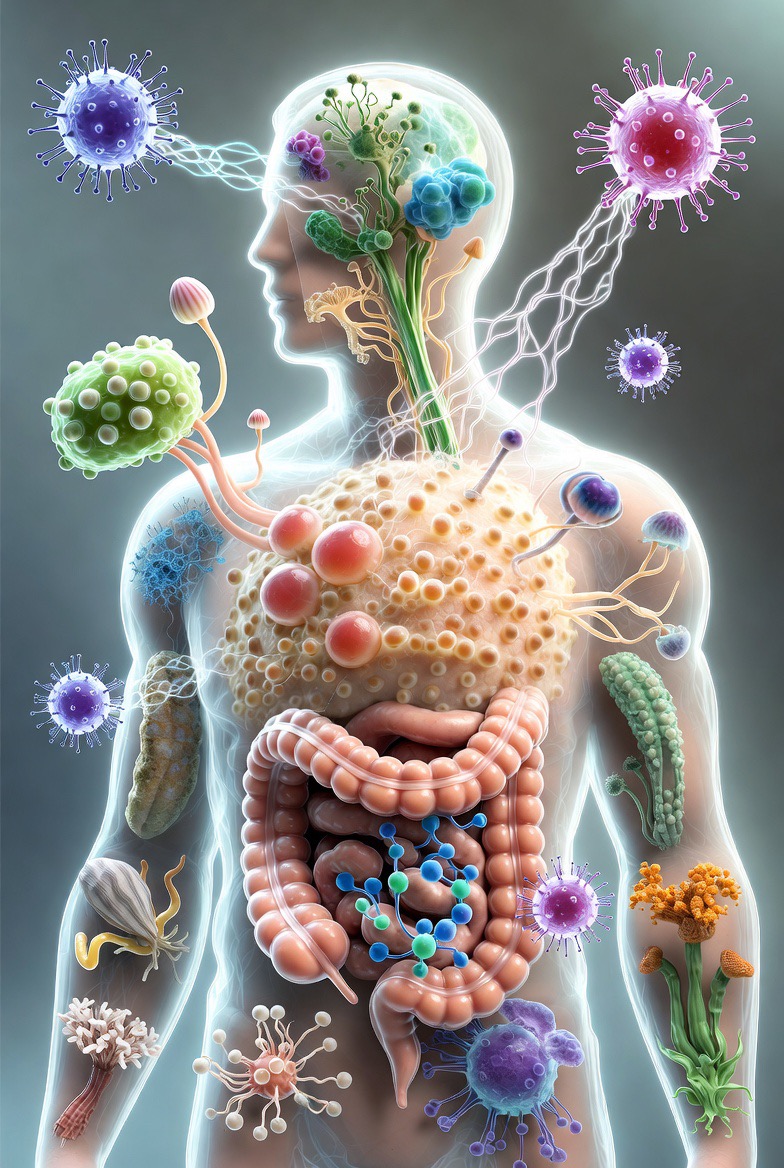
The living symbiosis — fungi have always lived inside us, shaping our immunity and health from birth.
Yet the most intimate chapter is happening right now, inside every human body. We live in constant symbiosis with our mycobiome — the fungal community that colonizes us from the moment we are born. Though fungi make up only 0.01–0.1% of our gut microbes, their larger size and powerful immune-signaling molecules make them disproportionately influential. In the gut, species like Saccharomyces boulardii and certain Candida strains help maintain balance, train our immune system, and assist digestion. On our skin, Malassezia fungi dominate — friendly partners that crowd out harmful bacteria.
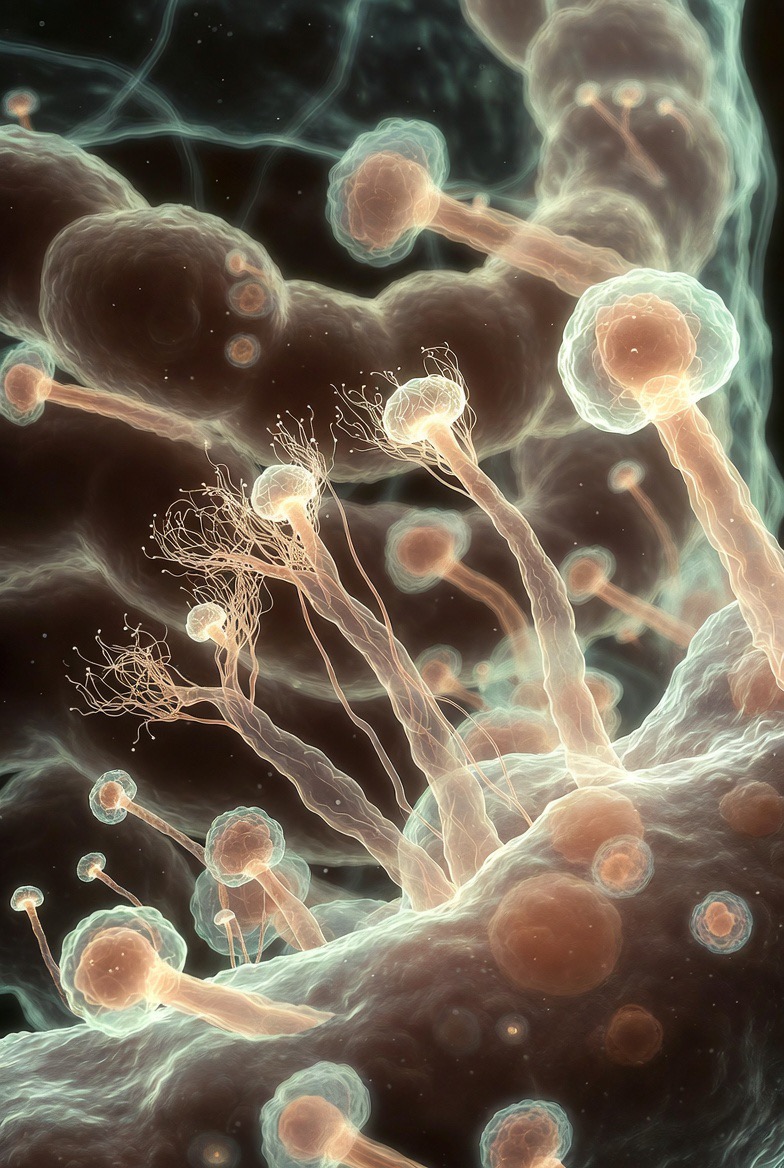
Our invisible allies — the mycobiome inside and on us, quietly ensuring survival and balance every single day.
This internal partnership is the direct descendant of the same ancient symbiosis that allowed plants to conquer land.
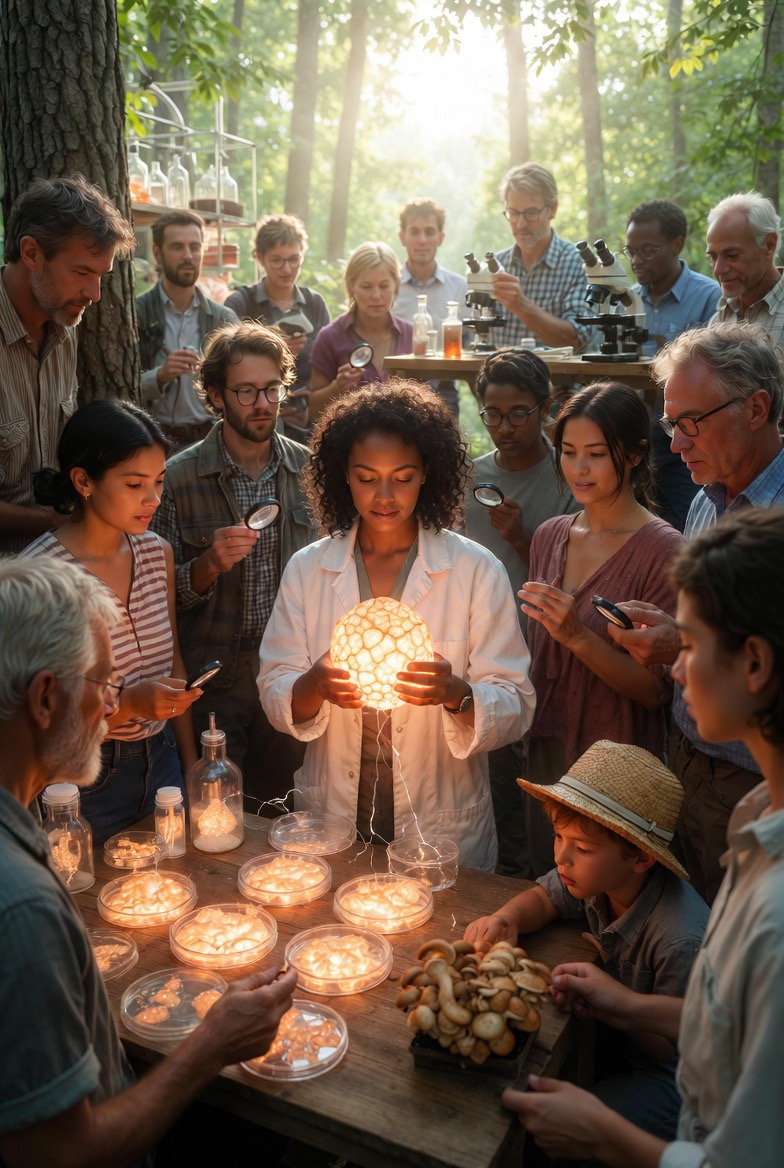
Today’s mycelial renaissance — fungi healing bodies, ecosystems, and our collective future.
Visionaries like Paul Stamets continue to reveal how mycelium can remediate polluted soils, replace plastics, and support pollinators — proving the same ancient partnership that built our planet can now save it.
Looking to tomorrow, our alliance is poised for its most transformative chapter yet. Mycelium is already being grown into building materials stronger and more sustainable than concrete, biodegradable packaging that replaces plastic, and even fashion-forward “mushroom leather.” Psilocybin and other fungal compounds are moving from clinical trials into mainstream mental-health care. Fungi are being deployed to clean oil spills, restore damaged soils after wildfires, and create closed-loop food systems for space colonies. At MycelNet we see a future where humans and fungi co-design solutions for climate change, food security, and planetary healing — continuing the 500-million-year conversation into the stars and beyond.
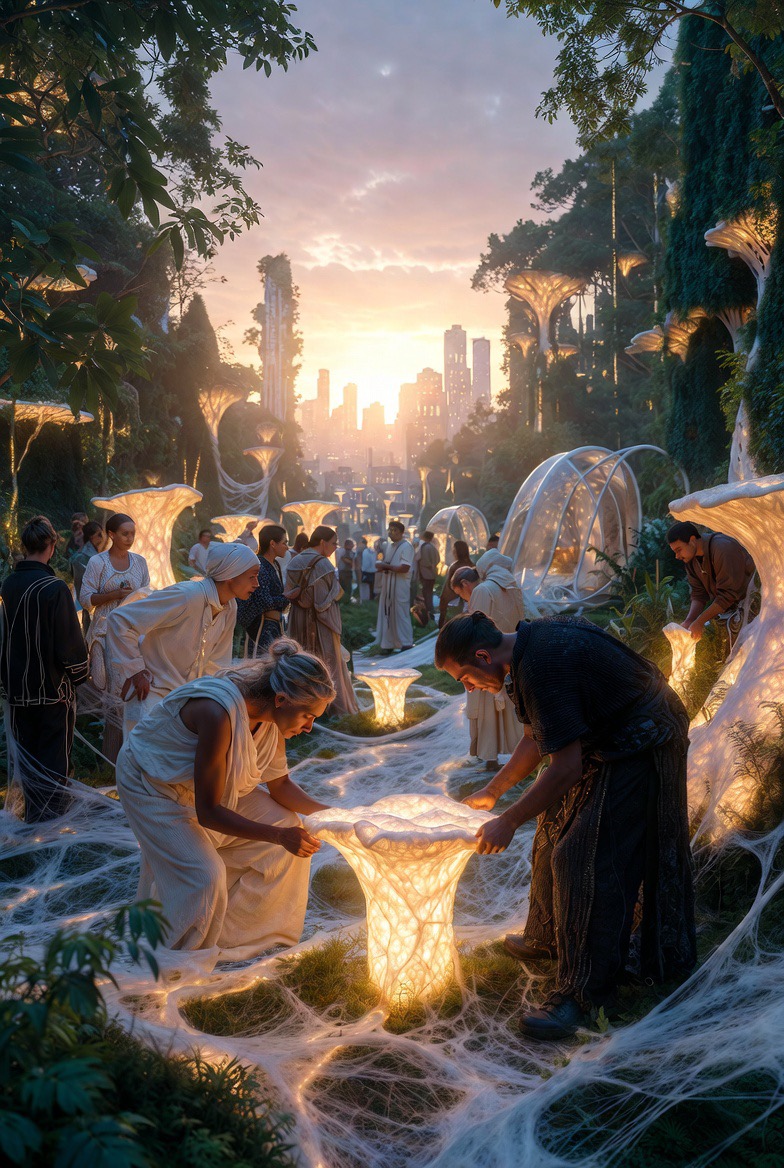
Tomorrow’s mycelial future — fungi and humans co-creating a sustainable world together.
The next time you breathe forest air, eat a mushroom, bake bread, or simply feel healthy, remember — you are part of the greatest symbiosis Earth has ever known. Fungi didn’t just help humans survive and evolve; they are still evolving with us, inside us, and now through us, every single day.
What chapter of this fungal-human story moves you most? Share your own experience, family recipe, scientific discovery, or vision for the future in the comments and tag #MycelNet in your fungi posts — let’s keep this ancient conversation alive and growing!