
V.Social Profile : How to Build Guide a Brand Early and Set Up a Page That Can Actually Grow
Do not just make an account. Build a base.
8 min readMar 22, 2026
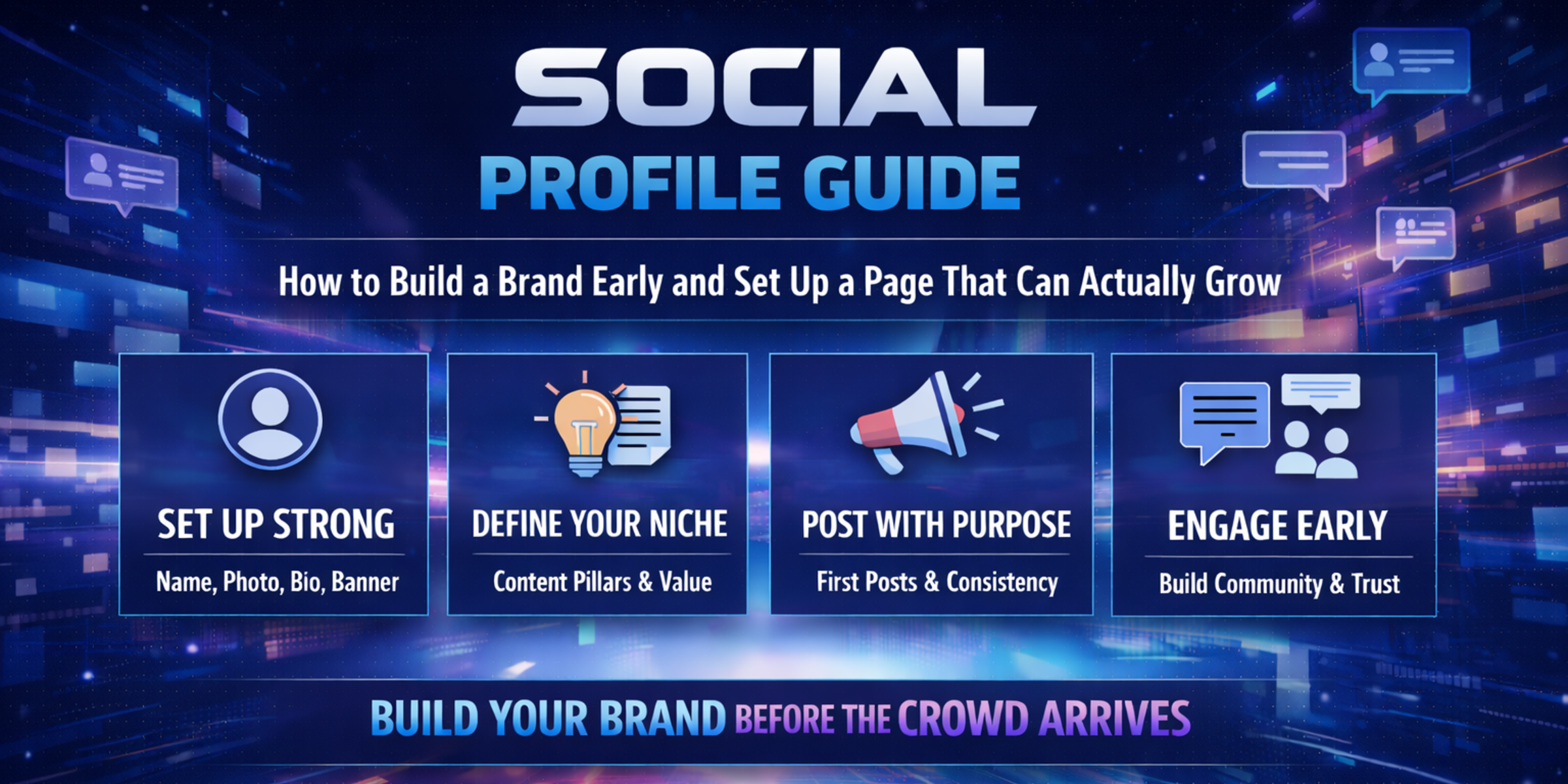
Building a strong brand on social media starts long before your first viral post. It starts with your profile.That is where people decide whether you look worth following, whether your niche is clear, and whether your page feels like a random account or the beginning of something bigger. On V.Social, that matters even more right now because the platform is still in its early-stage creator land grab phase.That creates a real opening for anyone serious about brand building.Not just influencers. Not just media pages. Not just meme accounts. Anyone with a niche, a voice, a topic, a skill, or a community angle can use an early platform like this to build visibility before things get crowded. This is not only about posting for attention. It is about turning attention into trust, trust into community, and community into brand growth, loyalty, and monetisation opportunities. This guide is about doing that properly.
Why Your V.Social Profile Matters More Than People Think
A lot of people treat profile creation like admin.Upload a picture. Write a few words. Add a banner later. Post something eventually. That is how weak brands are born. A strong profile does three jobs fast. It tells people who you are, what you are about, and why they should care enough to follow. On a platform still growing its culture and user base, that clarity can help you stand out much faster than it would on a crowded legacy network.That means your profile is not just a social page.It is your storefront, your positioning statement, your landing page, your first impression, and the first piece of proof that you are building with intent.
Step 1: Pick a Name That Is Easy to Remember
Your handle is not a tiny detail. It is brand infrastructure.The best handles are usually clean, simple, easy to say, easy to remember, and clearly linked to your niche, identity, or brand.If you are building a serious page, avoid messy usernames full of random numbers, extra punctuation, or confusing spelling. Early-stage platforms often reward people who move quickly enough to secure stronger brand names, and that can become a long-term edge if the network grows.A good V.Social handle should feel like something that could still work a year from now, not just something that fills a box today.Think long term. Ask yourself whether it sounds like a real brand, whether it could work across other platforms too, whether someone would remember it after seeing it once, and whether it matches your niche or tone. If not, keep refining it.
Step 2: Use a Profile Photo That Looks Deliberate
Your profile image should instantly match the kind of brand you want to build.
That does not always mean your face. It depends on the page.A creator-led personal brand might use a clean headshot, a strong portrait, or a distinctive visual identity. A niche page might use a logo, an icon, a mascot, or a branded lettermark. A meme or culture page might use a simple recognisable emblem, a bold visual symbol, or a style that stands out in the feed.What matters is not whether it is fancy. What matters is whether it looks intentional. Random crops, blurry images, cluttered backgrounds, and low-quality visuals instantly make a page feel weak.If you want people to take the account seriously, the profile image needs to say that before you say anything else.
Step 3: Build a Bio That Explains the Value Fast
This is where most people waste the opportunity.A weak bio says almost nothing.A strong bio quickly answers what you post, who it is for, and why it matters.You do not need to sound corporate. You need to sound clear.
A few good V.Social bio directions could be:
“Breaking down AI, tech, and what is coming next.”
“Daily nature, wildlife, and biodiversity updates.”
“Humour, memes, and cultural chaos from the internet.”
“Gold prospecting, bush gear, field finds, and stories.”
“Commentary on media, politics, culture, and online trends.”
The goal is to remove confusion.If someone lands on your page and cannot work out what your niche is in five seconds, your profile is doing a poor job.
Step 4: Choose One Niche Before You Try to Do Everything
One of the biggest mistakes early creators make is trying to build a page around ten different identities at once.That usually kills momentum.People follow clarity.If your page is about tech, memes, nature, finance, fishing, golf, commentary, lifestyle, news, or education, make that obvious.You can still have personality. You can still branch later. But early on, a narrow niche often grows faster than a vague identity. People need a reason to categorise you in their mind.That is how recognition starts.
Step 5: Make Your Banner Support the Brand
If V.Social gives you room for a header or banner image, use it properly.
Do not leave it blank if you can help it.Your banner should reinforce your page identity. It can include your niche theme, your tagline, your visual style, your logo, or the feeling of your brand.The banner is part of your first impression package. When someone visits your page, the profile photo, handle, bio, and banner should all point in the same direction.That is what makes a profile feel coherent.A good banner does not need to be complicated. It needs to feel aligned.
Step 6: Create Content Pillars Before You Start Posting
A lot of people fail because every post is invented from scratch.
That makes consistency harder than it needs to be.Instead, create three to five content pillars. These are your repeatable topic lanes. They help your audience know what to expect and help you know what to create.For example, a V.Social page about gold prospecting could use field trips and finds, gear and tool reviews, beginner tips, old maps and location history, and funny bush stories.
A tech page could use gadget news, AI tools, future trends, quick explainers, and opinion takes.A nature page could use wildlife facts, conservation news, field photography, habitat education, and hiking and outdoor tips.That is the play. Pick themes you can return to again and again without losing your identity.
Step 7: Your First Posts Should Define the Page
Do not let your first posts be random. Use them to establish identity.
Your opening batch should tell new visitors what this page is, what kind of content is coming, what tone you use, and why they should follow now.
A strong first-post sequence might include an intro post, a niche statement, a “what to expect here” post, one or two value-driven posts, and one post with personality or story.This gives your page shape.When new users arrive, you do not want them seeing a dead profile, one unrelated meme, a blurry repost, and a vague bio. You want them seeing a page that already feels alive.
That makes following far more likely.
Step 8: Use the Full Platform, Not Just Text Posts
One of the biggest advantages of a newer platform is that people are still learning what works.That matters because brands grow faster when they use format variety.Different formats do different jobs. Text posts build opinions and voice. Clips build fast attention. Videos build familiarity and depth. Live content builds trust and direct connection.If the platform supports multiple modes, lean into that early. It helps you learn what your audience responds to and makes your brand feel more present.Not every post needs to be polished. But your activity should show range and intent.
Step 9: Build for Trust, Not Just Reach
The bigger opportunity on V.Social is not just visibility. It is leverage.A platform like this can become a place where creators move beyond random posting and build a real community around expertise, interest, personality, or education.
That only works if people trust you.Trust is built through repetition and relevance. Post consistently. Stay in your lane. Be recognisable. Share useful or interesting things. Reply like a human. Give people reasons to return.
You do not need to be perfect. You need to be dependable.When people know what you are about and believe they will keep getting value from you, they begin to remember the brand.That is the real beginning of momentum.
Step 10: Treat Engagement Like Community-Building
Too many people post and disappear.That is a weak growth habit.If V.Social develops as a more community-first environment, then interaction will matter even more. That means your brand should not feel like a billboard.Reply to comments. Support adjacent pages. Join the tone of the platform without losing your identity. Make people feel like they are early with you, not just consuming from a distance.That can be a massive advantage on a younger platform.
Early communities often become loyal communities.
Step 11: Make Your Page Look Like It Is Going Somewhere
One of the smartest brand-building moves is making your page feel like a project with direction.People follow momentum.You can create that by posting regularly, having a recognisable visual style, referencing recurring themes, using consistent language, making the page feel alive, and showing there is more coming.This does not mean faking success. It means signalling purpose.
A quiet, empty, inconsistent profile feels disposable.A clear, active, well-positioned page feels like something worth watching grow.
Step 12: Think Beyond Followers From Day One
A real brand is not just a follower count.It is a base of attention, trust, identity, and future opportunity.That is why your V.Social profile should be built with the future in mind.Ask yourself whether this page could support a product later, drive people to a website or newsletter, become a community, attract collaborations, support direct monetisation, or become a known name in its niche.If the answer is yes, treat it like brand infrastructure, not a throwaway account.
A Simple V.Social Profile Formula
If you want the cleanest possible setup, use this formula:
Handle: short, memorable, brandable
Profile image: clear and intentional
Banner: visually aligned with the niche
Bio: what you do, who it is for, and why it matters
Content pillars: three to five repeatable themes
First posts: clear, value-driven, identity-setting
Tone: consistent and recognisable
Engagement: human, present, early, community-minded
That alone puts you ahead of most people.
Final Word
The real opportunity on V.Social is not just joining another platform.It is building early on ground that still has room.That makes your profile more important than it first appears.Done badly, it is just another account.Done well, it becomes the starting point for a recognisable niche brand that can grow with the platform itself.So do not just sign up.Pick a name that matters. Build a page with intent. Make your niche obvious. Post like you mean it. Show up early. Give people a reason to remember you. Because on platforms like this, the strongest upside often goes to the people who built before the crowd realised what was happening.