

Why biodiversity loss matters
Nature is not background scenery. It is the life-support system we all depend on.
3 min readApr 28, 2026
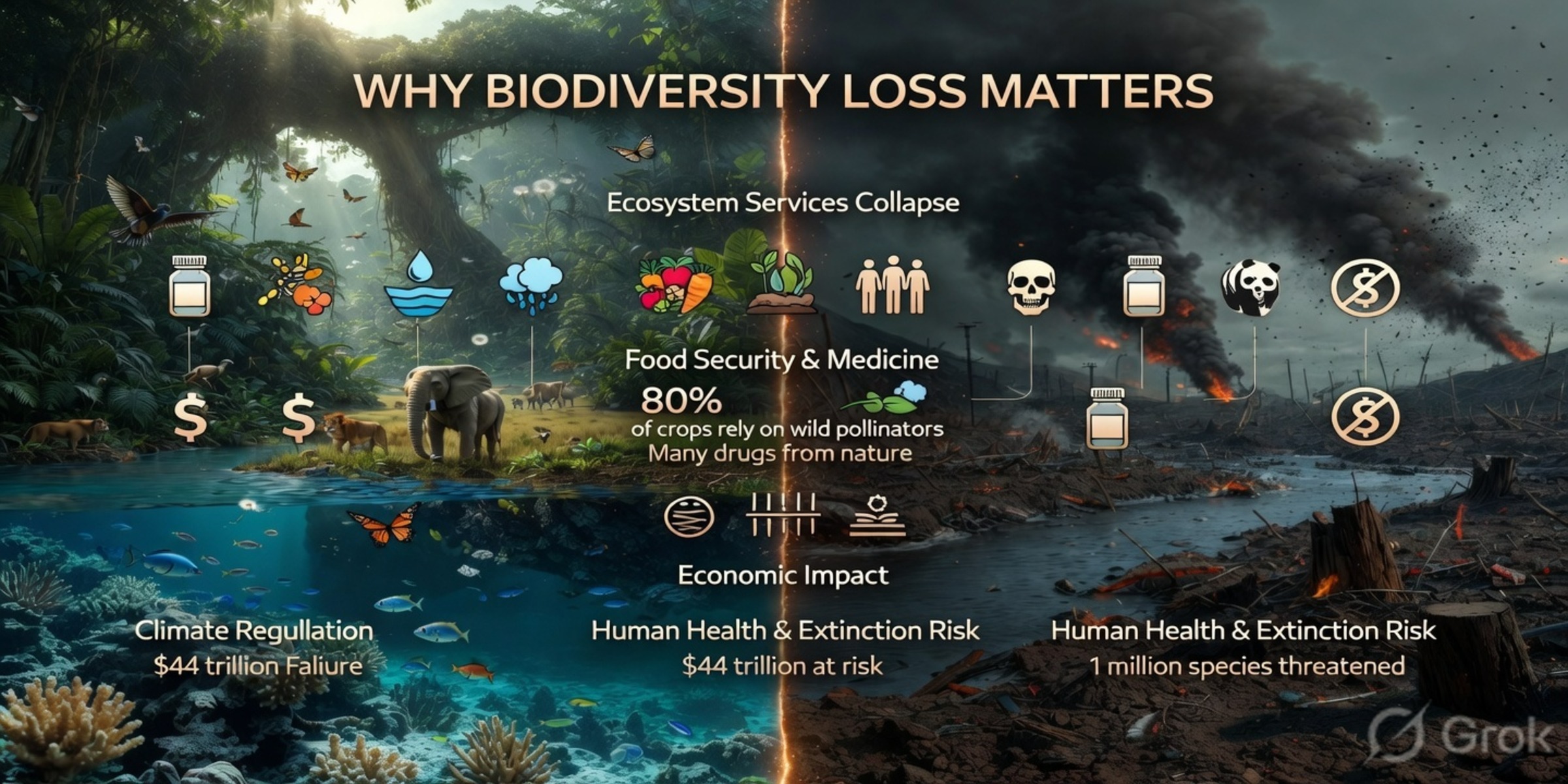
What biodiversity really means
Biodiversity means the variety of life on Earth. It includes animals, plants, fungi, insects, microbes, forests, rivers, oceans, grasslands, wetlands, and the genetic variety inside species themselves. It is not just about rare animals in faraway places. It is the whole living web that keeps nature functioning. When biodiversity is healthy, ecosystems can recover from fires, floods, drought, disease, and climate stress. When biodiversity is damaged, that natural strength starts to fall apart.
The facts are serious
The global picture is alarming. The IPBES Global Assessment found that around one million species are at risk of extinction, many within decades, unless major action is taken. WWF’s 2024 Living Planet Report found monitored wildlife populations have declined by an average of 73% since 1970. Freshwater wildlife has been hit especially hard, with some reporting showing freshwater populations among the steepest declines.
Why it matters to humans
Biodiversity loss is not just a nature problem. It is a human problem. Healthy ecosystems help provide clean drinking water, pollination for crops, fertile soil, natural pest control, medicines, fish stocks, timber, flood protection, and climate regulation. UNEP explains that biodiversity is about more than plants and animals; it is also about people and our need for food security, health, clean air, water, shelter, and a liveable environment.
Food depends on nature
Many crops rely on pollinators such as bees, butterflies, beetles, birds, and bats. Soil microbes help plants grow. Wetlands filter water. Forests stabilise rainfall and protect landscapes from erosion. If biodiversity keeps shrinking, food systems become more fragile. Prices can rise, harvests can fail more often, and rural communities can suffer first. UNEP has identified the global food system as a major driver of biodiversity loss, with agriculture alone linked to threats against many species at risk of extinction.
Climate and biodiversity are connected
Climate change and biodiversity loss feed into each other. Forests, oceans, wetlands, mangroves, peatlands, and grasslands store carbon and help regulate the climate. When those systems are destroyed, they release carbon and lose their ability to protect us. The UN describes biodiversity as one of our strongest natural defences against climate change.
Disease risk can rise
When wild habitats are damaged, animals are pushed into closer contact with humans, livestock, and settlements. That can increase the chance of disease spillover. Healthy ecosystems can act as buffers, while damaged ecosystems can create more risk. UNEP has warned that healthy biodiversity can help protect against the spread of some diseases.
The deeper problem
The real danger is that ecosystems do not always decline slowly and politely. They can reach tipping points. A river can become too polluted to recover easily. A forest can dry out and shift toward collapse. A reef can bleach and lose the species that depend on it. Once these systems break down, rebuilding them can be expensive, slow, or impossible within a human lifetime.
Why it matters in Australia
Australia has extraordinary wildlife, but also serious pressure from land clearing, invasive species, fire, climate change, pollution, and habitat fragmentation. The Australian Government has committed to protecting and conserving 30% of Australia’s landmass and 30% of marine areas by 2030, in line with the global “30 by 30” biodiversity target.
What can change
The world has already agreed on major biodiversity goals through the Kunming-Montreal Global Biodiversity Framework, which includes 23 global targets for urgent action by 2030. One of the best-known targets is conserving at least 30% of land, inland waters, coastal areas, and oceans by 2030. But protection on paper is not enough. It has to be well-managed, connected, properly funded, and respectful of Indigenous peoples and local communities.
Final thought
Biodiversity loss matters because it is the slow unravelling of the natural systems that keep us alive. It affects the food on the table, the water in the tap, the air in our lungs, the stability of the climate, and the survival of wildlife that has taken millions of years to evolve. This is not just about saving nature for nature’s sake, although that matters too. It is about protecting the living foundation beneath every town, farm, economy, and future generation.